

Fertility Preservation Before Cancer Treatment: Timing, Options and Care Coordination
A practical guide to fertility preservation before cancer treatment: when to ask for a referral, what egg, embryo and sperm freezing involve, and how to coordinate oncology and fertility calendars. Includes storage costs and questions for both appointments.
Why the conversation belongs before treatment starts
Chemotherapy, radiation, surgery and some targeted or hormonal therapies can affect the ovaries or testes. Fertility preservation is the practice of collecting and storing eggs, embryos, sperm or reproductive tissue before that harm occurs, so a future option remains open. It does not require you to decide now whether you want children after cancer. It simply keeps the door from closing while there is still time.
ASRM's 2026 committee opinion says patients facing gonadotoxic therapy or gonadectomy should receive timely counseling about the risk to fertility and be referred quickly to a program able to offer established preservation methods. NCI reports that survivors were less likely to regret their decisions when they had spoken with a fertility specialist, whether or not they later used stored material.
Risk is not uniform. It depends on the diagnosis, drug class, cumulative dose, radiation field, surgical approach, age at treatment and baseline ovarian or testicular function. Some regimens carry a low risk; others carry a high one. Because the estimate is individualized, a conversation with the oncology team should happen before the first treatment cycle whenever possible. Do not delay or change a cancer treatment plan on your own: any scheduling decision has to be made by your cancer team.
Who should be referred, and when
The ideal moment is at diagnosis, before chemotherapy, pelvic or cranial radiation, or gonadal surgery begins. In practice, the available window differs by case. Sperm collection can often be arranged within days. Egg or embryo freezing usually requires ovarian stimulation plus a retrieval procedure, commonly on the order of two to three weeks, although some centers use random-start protocols and some patients need a different schedule. A rapidly progressing leukemia or an urgent operation may leave little or no room for a delay.
A useful first step is to ask the oncologist three questions: what is the expected effect of this regimen on ovarian or testicular function; is there any safe window before treatment starts; and who is the fastest fertility contact we can call today. Those answers determine which options are realistic.
The first fertility appointment
The fertility team will review the cancer diagnosis and treatment plan, prior pregnancies, medications, bleeding or infection risk, and current ovarian or testicular function. Testing may include AMH, antral follicle count, a baseline ultrasound and semen analysis. AMH helps describe the ovarian follicle pool; it is not a direct measure of future live birth, and a low or high value has different meaning at different ages. Our guide to AMH levels and IVF explains that distinction.
Ask the program what it actually reports: eggs warmed and surviving, fertilization, embryos reaching blastocyst, and live birth per transfer, broken out by age group. Ask how long samples have been stored and what happens if the program closes. Public ratings, years in practice and posted prices can help you organize a shortlist, but they are reference dimensions only; they are not measures of clinical success or live-birth rates. Base clinical judgments on SART and CDC data and on an in-person discussion with a licensed clinician.
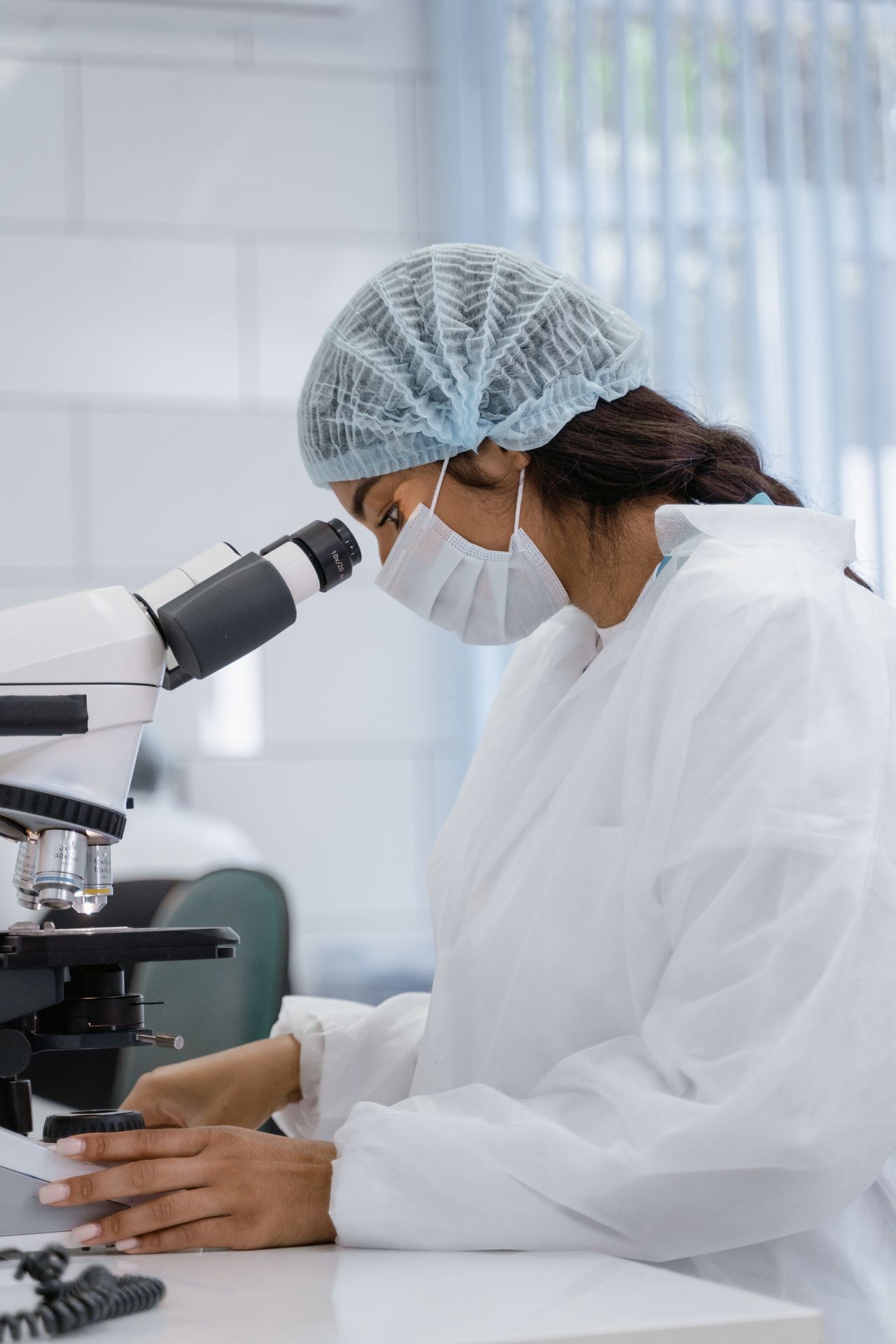
This laboratory image illustrates the technical work behind sample handling and cryopreservation. It is not a patient photograph and is not evidence of any clinical outcome.
Options for people with ovaries
Embryo freezing is the most established route when a sperm source is available. It involves stimulation, egg retrieval, fertilization with partner or donor sperm, and freezing the resulting embryos. A later cycle can use a frozen embryo transfer; our frozen embryo transfer guide describes that process.
Egg freezing stores unfertilized eggs, which can be useful when no sperm source is available or when a patient wants to keep decisions about future parenting separate. Fertilization happens later through IVF, often with ICSI. Results are strongly age-related, so it helps to read egg freezing basics alongside egg freezing success rates by age.
Ovarian tissue cryopreservation removes and freezes ovarian cortex, usually by laparoscopy, for later transplantation. It has been used in selected children and young patients, but availability, outcomes and regulatory status vary; in many settings it remains a specialized or research-level service and should be discussed as such.
Gonadotropin-releasing hormone agonists (GnRHa) may be used alongside certain breast cancer or lymphoma treatments to reduce ovarian injury. They are not a substitute for egg or embryo freezing when those options are feasible, and the decision belongs to the oncology team.
Radiation shielding or ovarian transposition may reduce dose to the ovaries in selected pelvic radiation fields. Whether either is appropriate depends on the field and the surgery plan.
Stimulation is not always straightforward: a cycle can be cancelled if the response is low. The cycle cancellation and low-response checklist explains how such a cycle is reviewed.
Options for people with testes
Sperm banking is usually the first discussion. A semen sample is analyzed, and if time allows, more than one sample may be stored. When ejaculation is not possible because of obstruction, pain, neurologic conditions or age, a urology team may discuss vibratory stimulation, electroejaculation under anesthesia, or surgical sperm retrieval such as TESE or TESA.
Testicular tissue cryopreservation is still experimental in many settings and should be framed as such, usually within a specialized program or study.
During treatment and for the period recommended by the oncology team, patients are commonly advised to use contraception because of possible effects on sperm or eggs and the unknown effects of treatment on a pregnancy. NCI's male fertility and cancer page covers these practical points.
When the patient is a child or adolescent
For minors, the conversation involves parents or guardians, the child's assent when appropriate, and later re-assessment at puberty. Ovarian or testicular tissue storage may be the only physical option before puberty, but its experimental status and uncertain future use must be explained honestly. Psychosocial support matters as much as the procedure: the aim is to preserve a future choice without putting a child in the position of making an adult decision.
Questions to take into both appointments
- Has my exact regimen been linked to ovarian or testicular damage, and at what cumulative dose?
- How many days can safely pass before treatment, and which preservation steps fit in that time?
- Which methods are established for my age and diagnosis, and which are experimental?
- What outcomes does your lab publish, and for which age groups?
- What are the medication, procedure, anesthesia and lab fees, and what does storage cost per year?
- What happens to stored samples if I move, change clinics, or stop treatment?
- What contraception is recommended during and after therapy?
- When is it reasonable to try for pregnancy afterward, and who clears that decision?
- If ovarian function does not recover, what options should we discuss without rushing?
- Who coordinates the fertility calendar with the oncology calendar?
Cost, insurance and storage
Fees usually include consultation, stimulation drugs, monitoring, retrieval, anesthesia, laboratory work and the first period of storage. Embryo freezing adds IVF or ICSI laboratory steps; later use adds thawing and transfer. Storage is commonly billed annually, so it is worth reading our embryo storage cost guide before signing an agreement. Coverage varies widely by state and by plan documents; the state insurance overview is a starting point, not a determination of your benefits.
Ask for a written estimate and a financial counselor. A posted package price is a commercial detail, not evidence of a clinical result.
After treatment: using what was stored
Before trying to conceive, most patients need a fresh assessment of ovarian reserve or semen parameters and an oncology clearance about timing. Pregnancy after cancer is possible for many people, but the right interval depends on the diagnosis, treatment and current health. When eggs or embryos are used later, the process follows IVF steps; the IVF step-by-step guide walks through them. If ovarian function does not return, a clinician may discuss hormone care, donor eggs or other paths to family building. None of these is a duty; they are options to consider with time and support.
Stored material does not turn into a pregnancy on its own, and survival and live-birth rates vary with age, label, laboratory and uterus. Ask for numbers that match your situation rather than accepting a single headline figure.
Key takeaways
- Ask about fertility at diagnosis, before the first cancer treatment.
- Do not change the oncology schedule without the cancer team's approval.
- Established options are egg, embryo and sperm freezing; tissue freezing may be experimental.
- Compare programs with SART/CDC data and a clinical conversation, not public scores or years in business.
- Get written costs, including annual storage and later thaw and transfer.
- Keep both teams talking to each other, and allow yourself time to decide.
References
- NCI: Female Fertility and Cancer Treatment
- NCI: Male Fertility and Cancer Treatment
- ASRM: Fertility preservation in patients with medical indications, committee opinion (2026)
- ASRM Ethics Committee Opinion: Fertility preservation and reproduction in patients facing gonadotoxic therapies
This article is general education, not medical advice. Decisions about fertility preservation and cancer treatment should be made with licensed clinicians who know your history.